
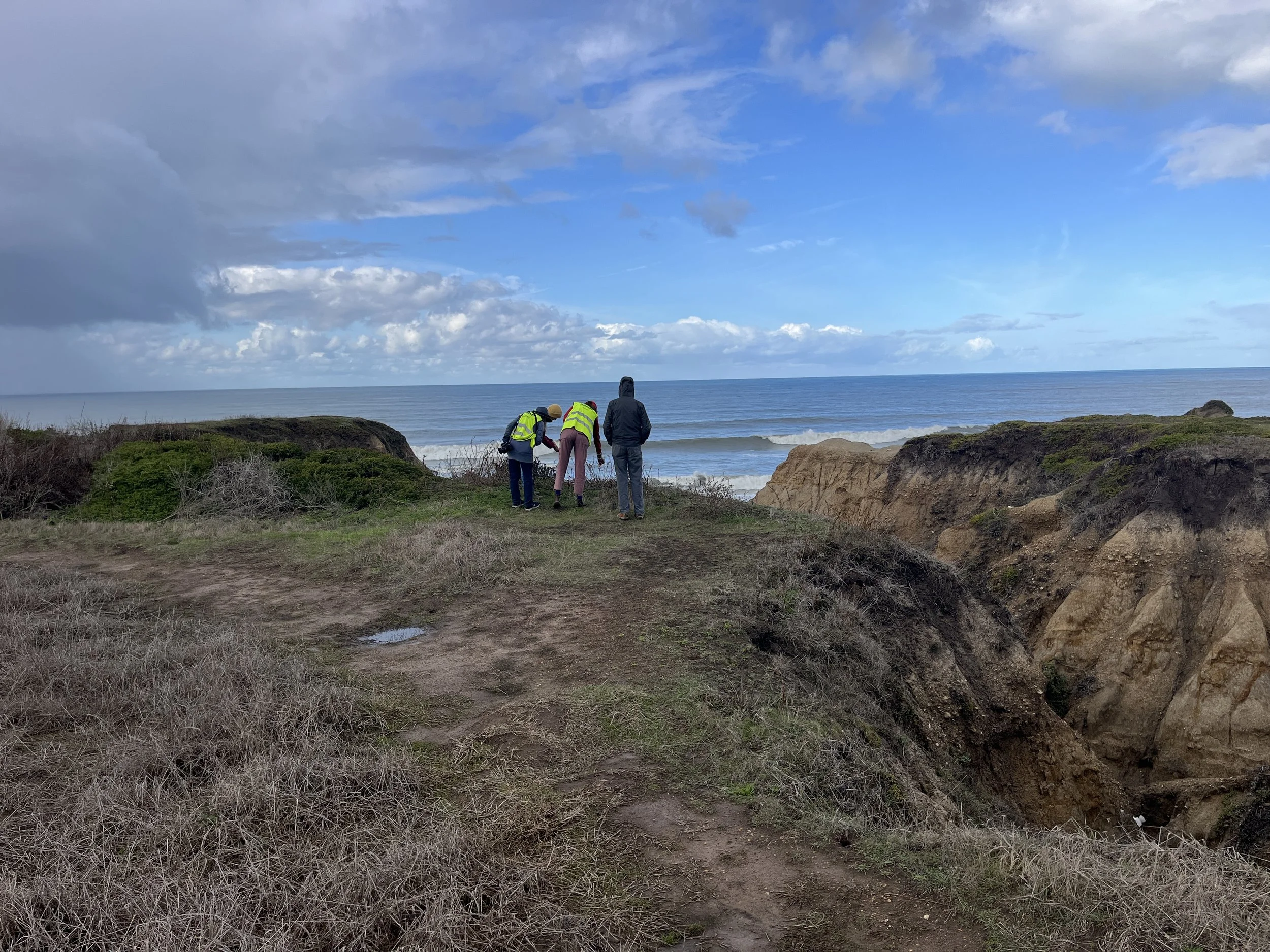
A Coastside Land Trust team set out on a stewardship mission today, exploring the Purissima Old Town Site (POTS) and Wavecrest Open Space, scouting for habitat restoration and stewardship projects to prioritize in the year ahead. The team inspected and planned potential projects for the Habitat Heroes and Team Zimmer in both locations.
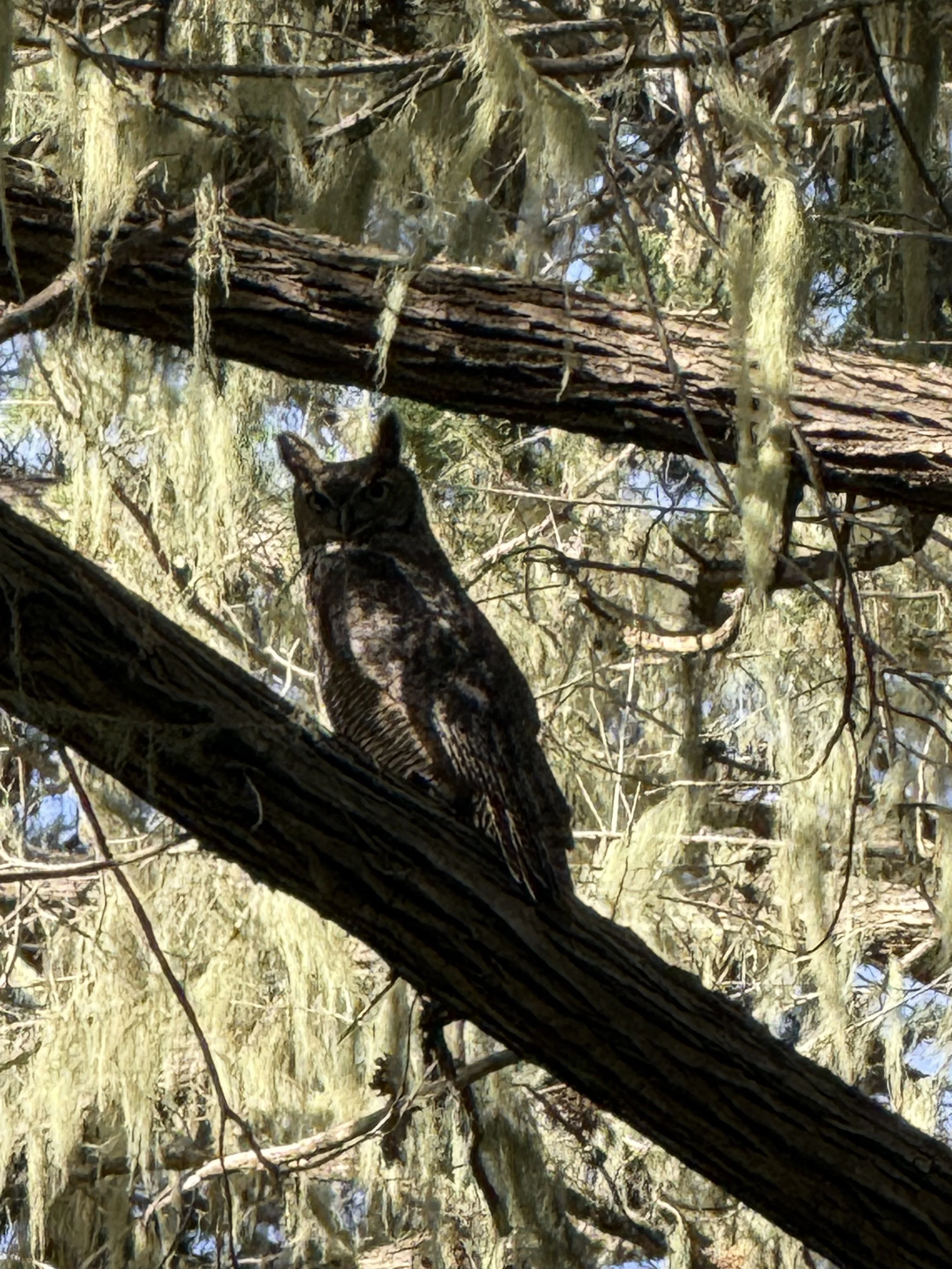
Photo credit: Ava Tolbert
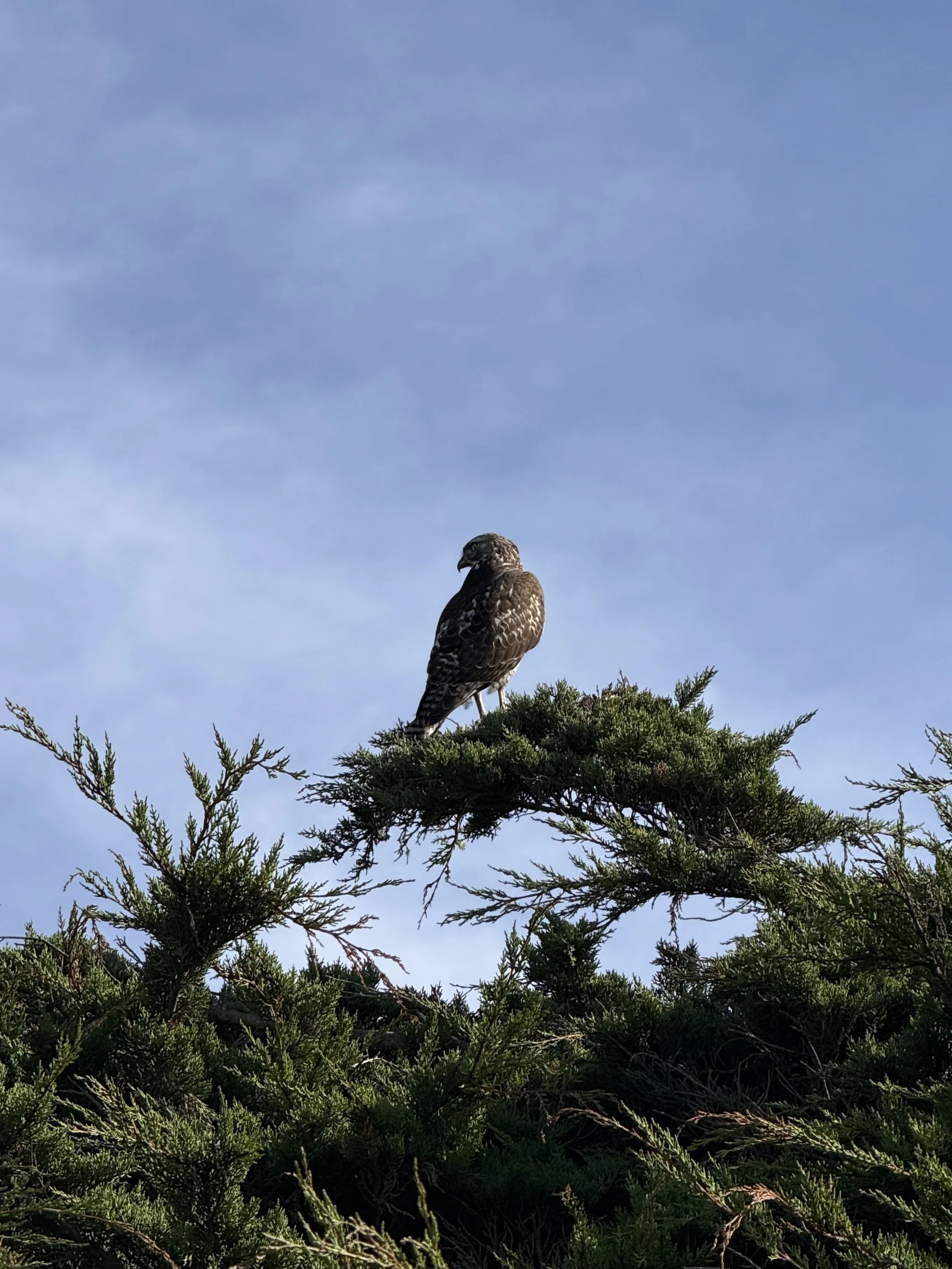
At POTS, the team spotted a beautiful Great horned owl. At Wavecrest, red-tailed hawks, white-tailed kites, and American kestrels were making appearances overhead, while a particularly green Pacific chorus frog offered a glimpse of life closer to the ground.
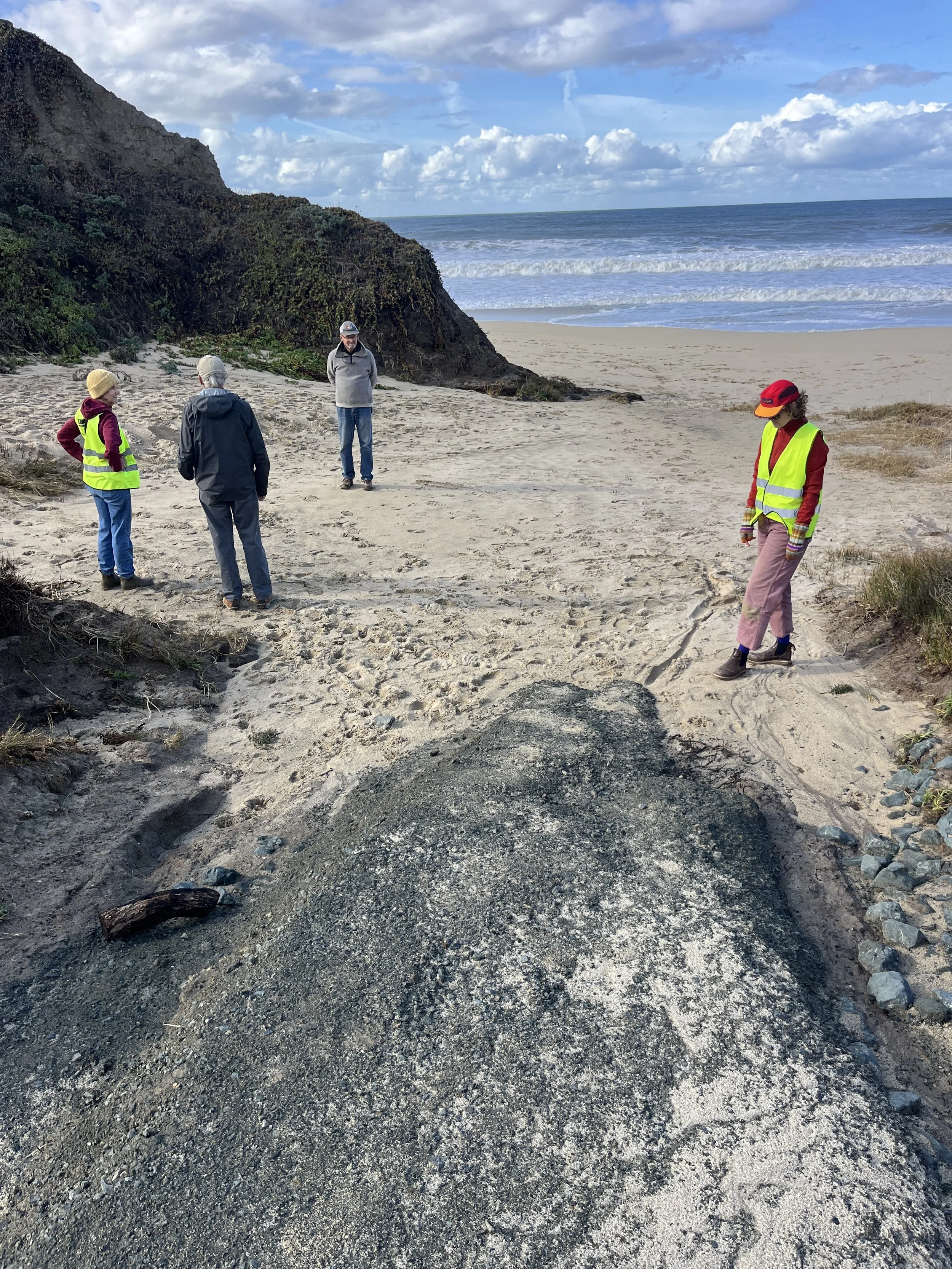
Checking out erosion and recent accumulation of sand on the trail after the recent storm.
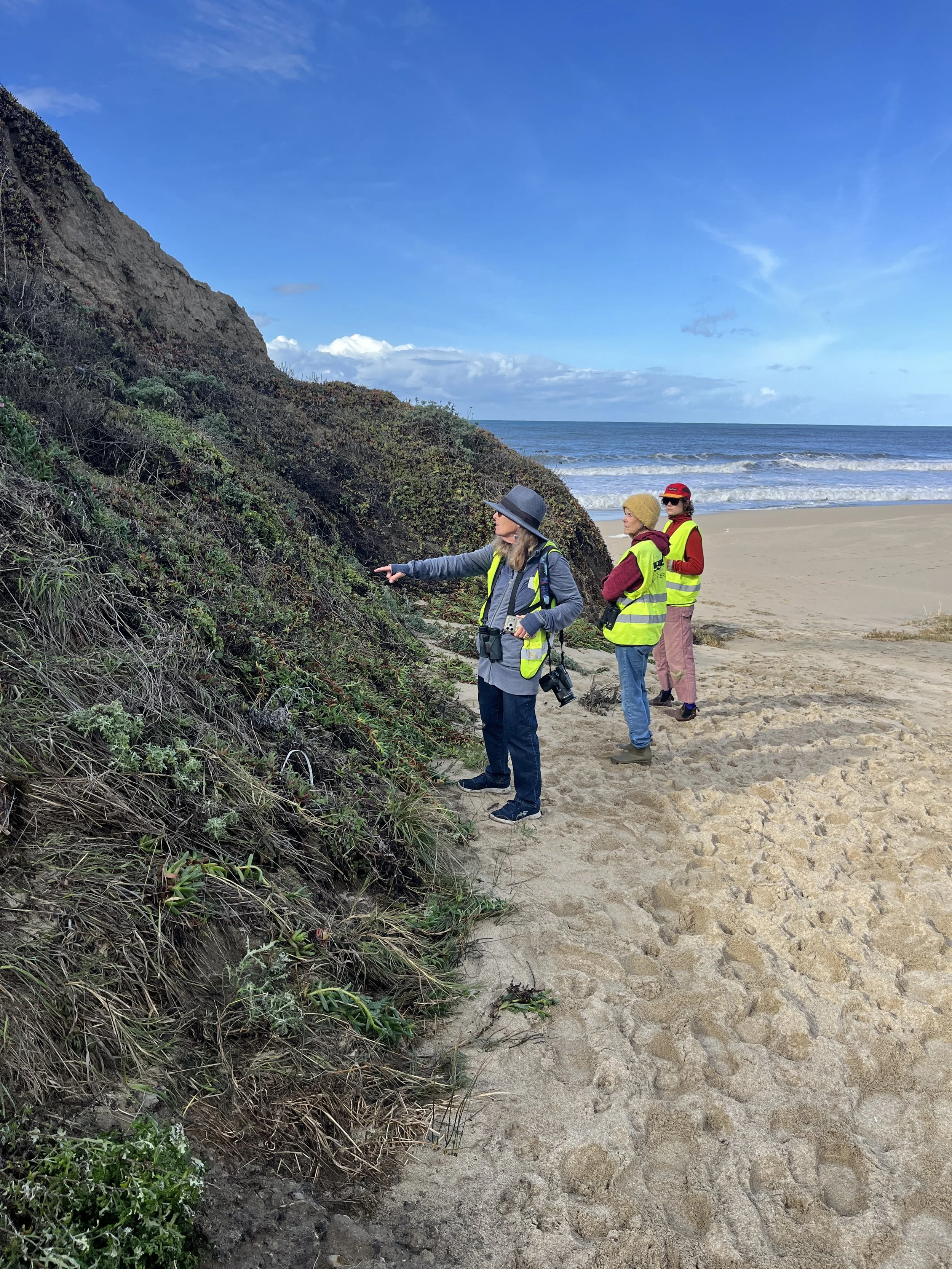
The plants had their own surprises. Hidden among patches of invasive ice plant, the team found several native Dudleya plants worth protecting. And then there was the mystery of the brown goo…
Several Juncus (rush) plants had brown, gelatinous material surrounding their seed heads. At first, it looked a little like amphibian eggs. But when the same goo appeared on nearly every plant, a closer look revealed something much more interesting: the plants' own seeds were producing it!
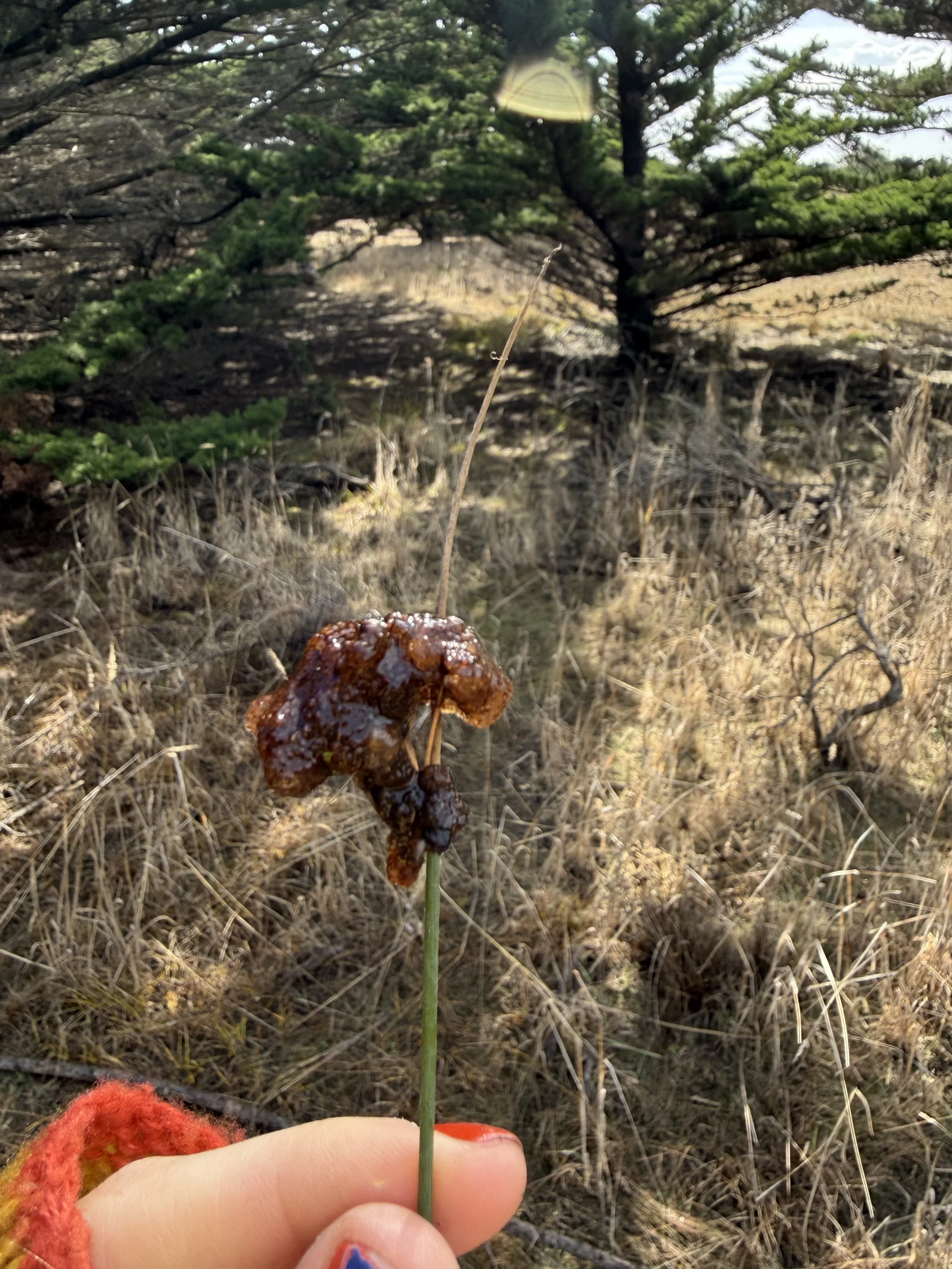
Photo by Ava Tolbert
This is a natural seed adaptation called myxodiaspory, in which seeds produce a mucilaginous (gel-like) coating when wet. Much like chia seeds soaking in water, the seeds develop a slippery, gelatinous layer. This coating can help protect seeds from drying out and help them stick to passing wildlife, potentially giving them a ride to a new place where they can grow. Plants are so clever!!
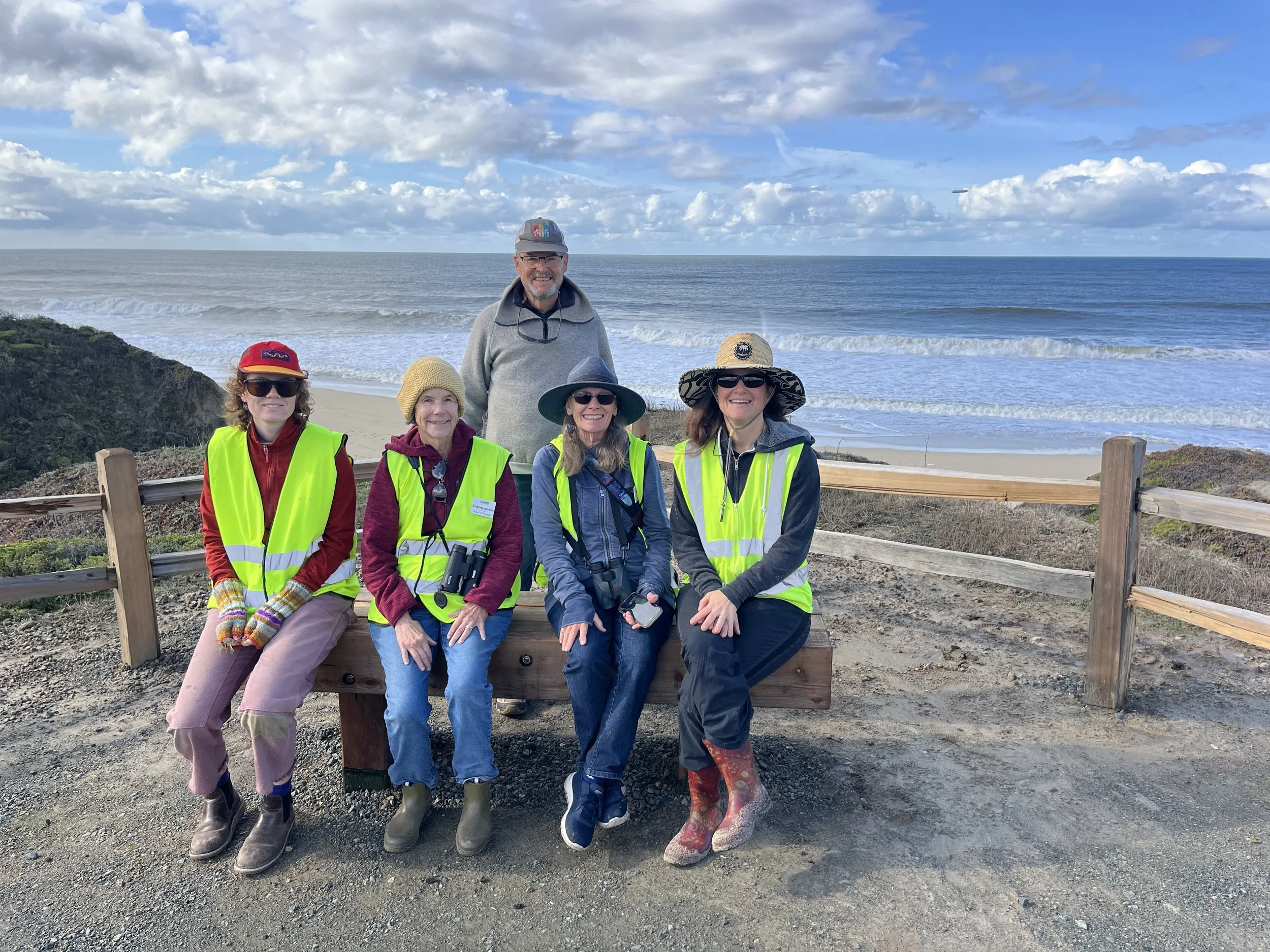
Thank you to John Zimmer, Pat Tierney, Sara Polgar, Ava Tolbert, Barbara Dye and Barbara Lohman for your careful attention to our open space lands today on what you called your “Stewardship Safari!”
If you too are willing ot help us care for these open spaces, please consider a donation of any size to help us care for and protect these beloved coastal landscapes.