
Things got a little muddy (in the best way!) as the Junior Land Stewards recently dove into the fascinating world beneath our feet — soil science.
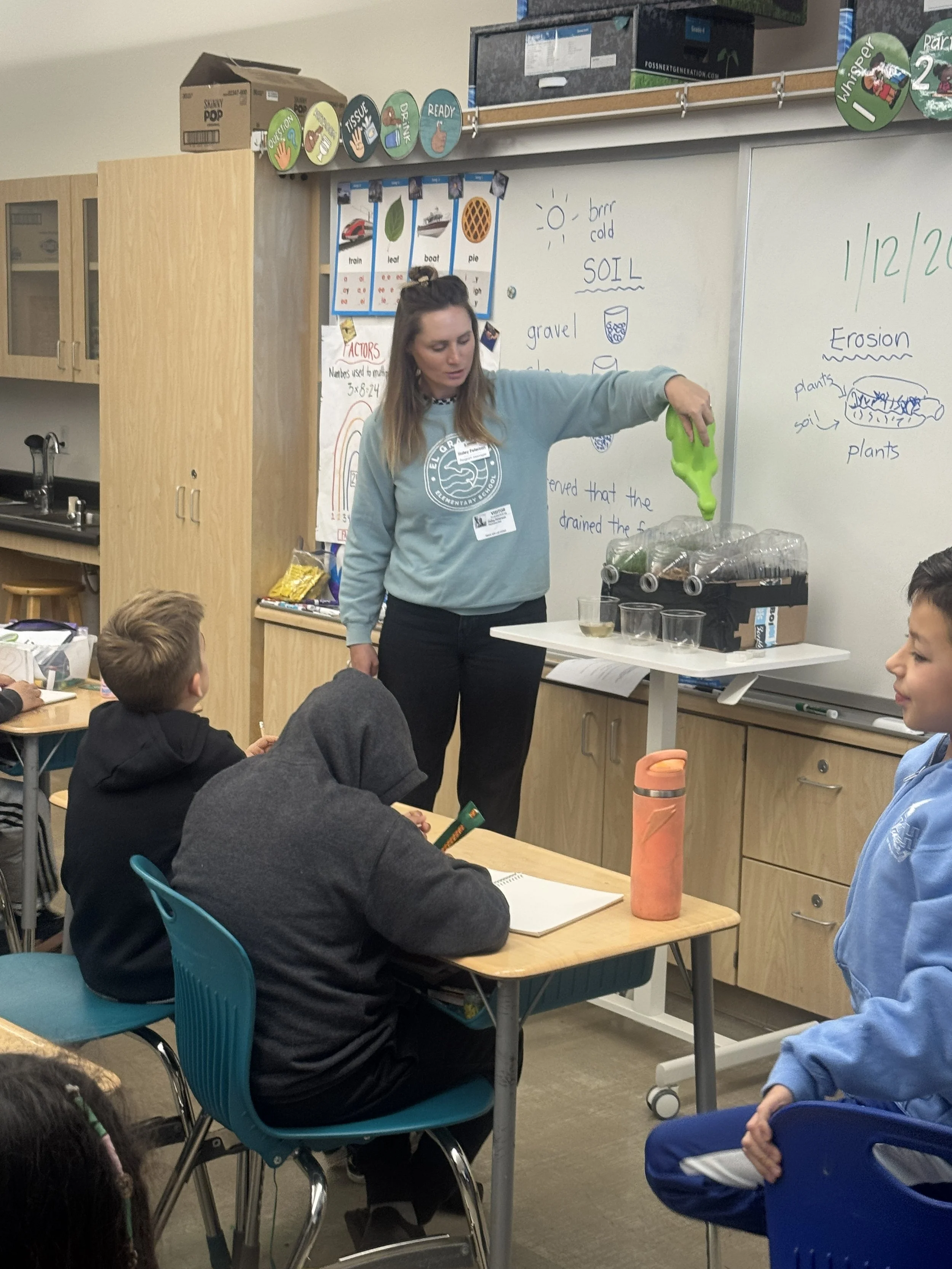
Through hands-on demonstrations, students explored soil texture, drainage, and erosion, learning how different types of soil look, feel, and behave in the real world. After reviewing soil particle sizes, they made predictions: which soil would drain the fastest — gravelly, sandy, or clay-rich?
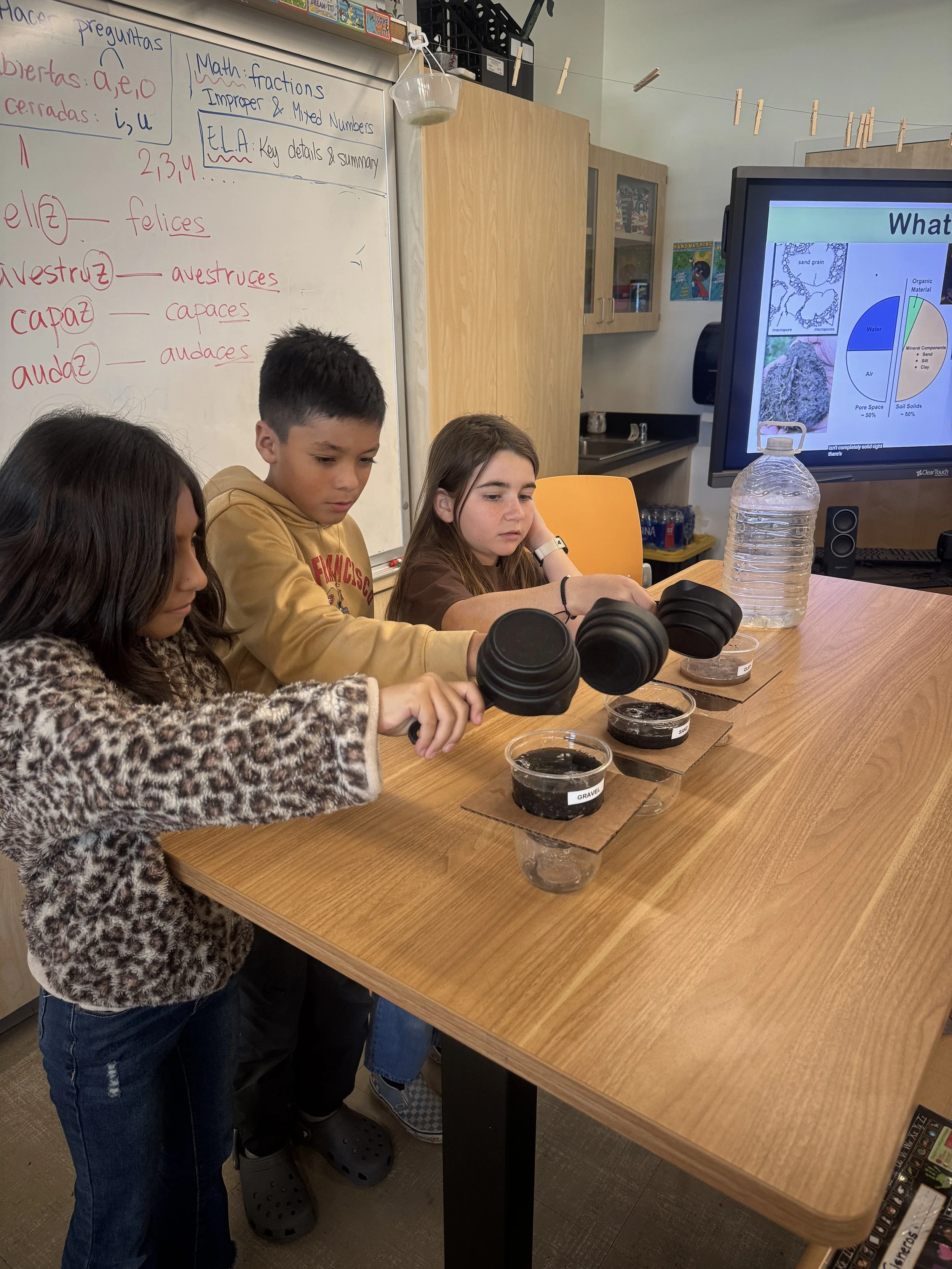
Then came the big test. Equal amounts of water were poured over each soil type, and students watched closely as the water moved through. The winner? Gravelly soil, with water racing through its larger spaces between particles.
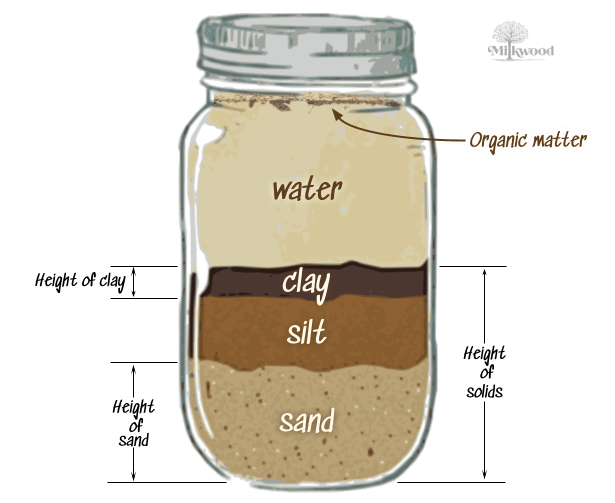
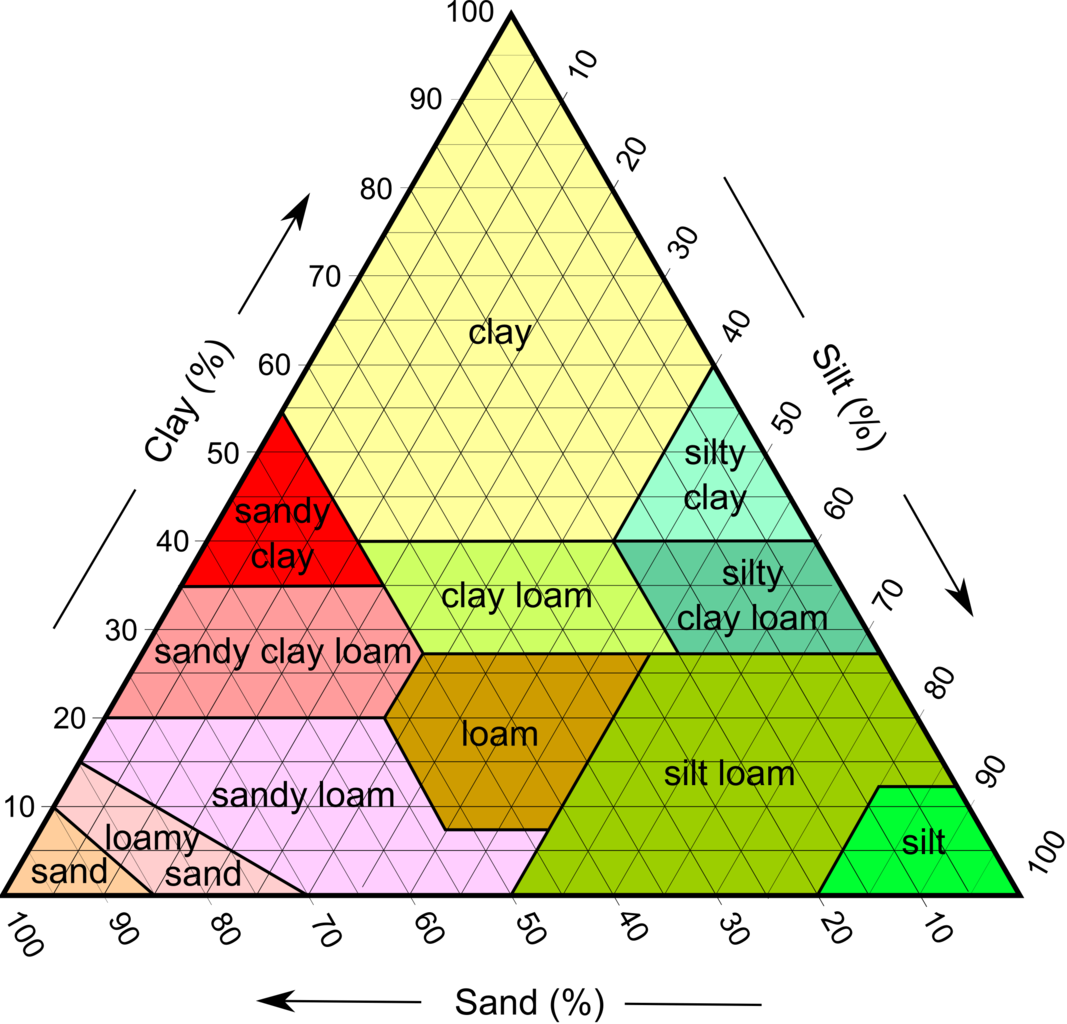
Next, students turned their attention to their own habitat gardens. Using the soil jar test and a soil texture triangle, they calculated percentages of sand, silt, and clay to determine their garden’s soil type — a little math, a little science, and a lot of discovery.
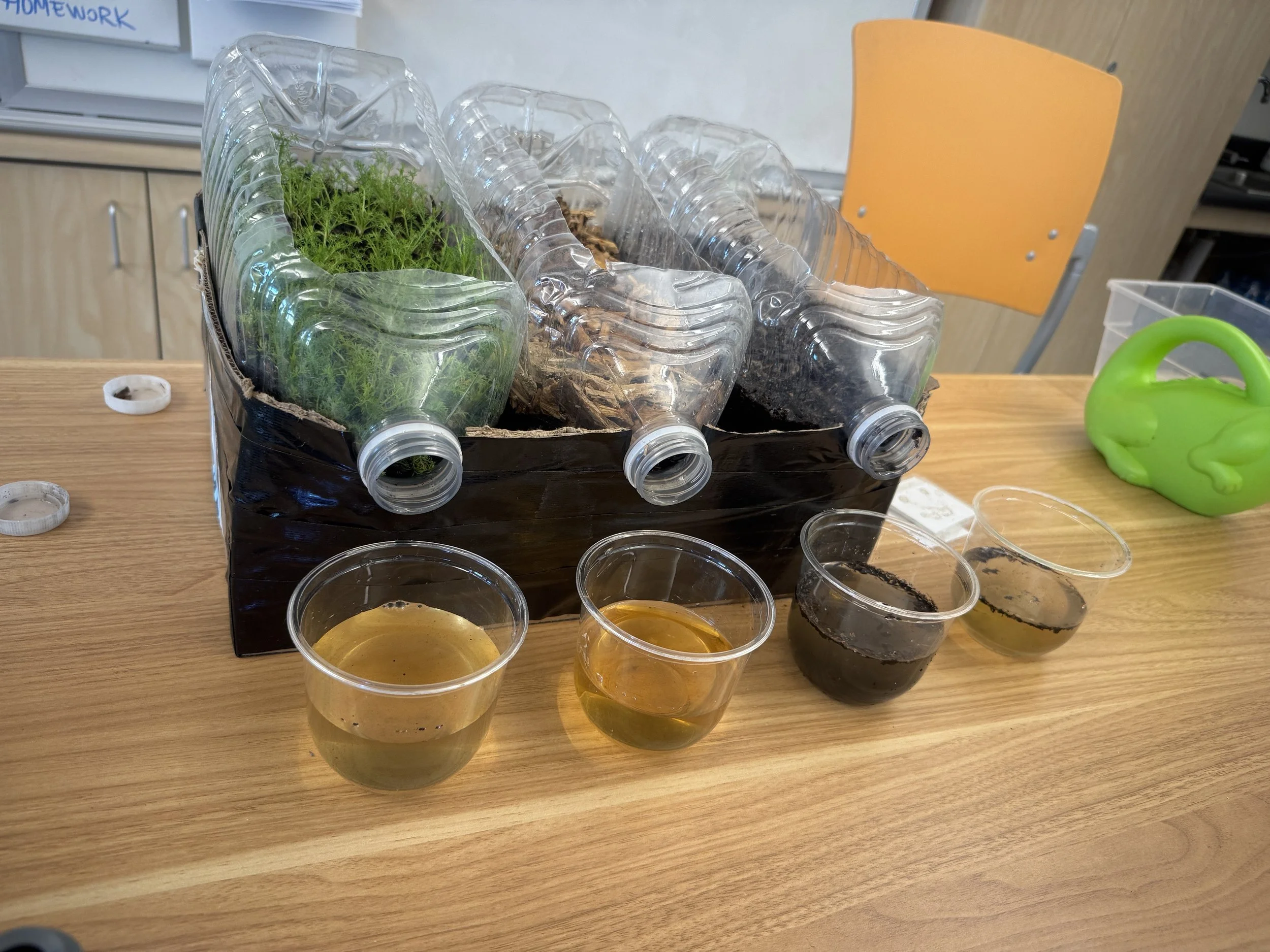
To wrap up the day, the focus shifted to soil health and erosion prevention. Students simulated a rainstorm over three scenarios: bare soil, soil covered with mulch, and soil supported by plants and roots. The results were clear and powerful. Plant roots play a critical role in holding soil in place, while mulch acts as an important temporary shield against erosion.
By the end of the lab, students had a new appreciation for the ground beneath them. As one student put it, “I thought soil was cool before this lab, but now I think it’s even cooler!”
We couldn’t agree more. Healthy soil is the foundation of healthy habitats — and future stewards are learning just how important it is.
Thank you to the Maxwell/Hanrahan Foundation, Cabrillo Unified School District, Granada Community Service District, and everyone who contributed during Coastside Gives for their generous support of this program.
If you would like to help this program continue to grow, please consider making a donation to support the Junior Land Stewards and the ongoing protection and stewardship of our precious open spaces.