
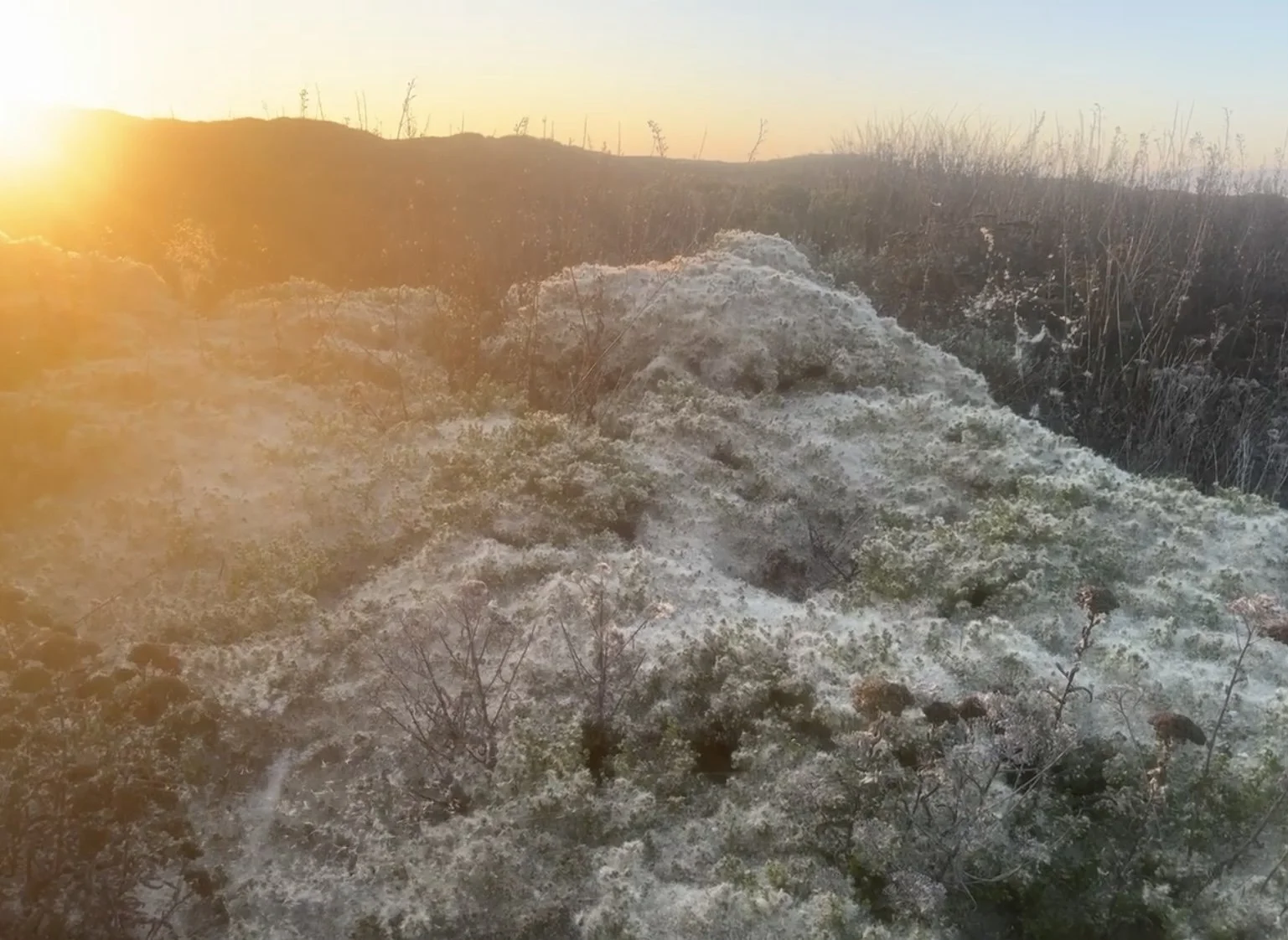
If you’ve walked the bluffs, trails, or open fields along the San Mateo Coast lately, you’ve probably noticed clouds of white fluff drifting through the air. It looks almost like snow, but it’s not winter weather—it’s coyote brush (Baccharis pilularis) going to seed.
What’s Happening Right Now
In early fall, female coyote brush plants burst into bloom with cream-colored flowers. Soon after, those flowers transform into silky seed heads, each attached to a tiny parachute of fluff. The wind carries these seeds far and wide, a natural strategy to help the plant spread and thrive. On breezy days, you can actually see the seeds floating across the landscape, sometimes catching the sunlight like sparkling confetti.
Why It Matters
Coyote brush is one of the most important native plants on our coast. It’s a pioneer species, meaning it’s often one of the first shrubs to grow back in disturbed or bare areas. Its deep roots help prevent erosion, while its dense growth offers shelter for birds, insects, and small mammals.
This plant also supports pollinators. In late summer and early fall, when many other flowers have finished blooming, coyote brush provides a vital nectar source for native bees, butterflies, and flies. If you stop and listen, you’ll often hear the buzzing and humming of insects hard at work.
The Cool Factor
Natural Snowfall: The airborne seeds create a magical scene, turning coastal trails into living snow globes.
Resilient Beauty: Coyote brush can survive salty winds, poor soils, and drought, making it a champion of coastal resilience.
Wildlife Haven: Birds use it for cover, deer browse on it, and countless insects depend on its flowers.
Restoration Hero: Land stewards often plant coyote brush first in restoration projects, knowing it will prepare the ground for other native species to follow.
So… next time you see the fluff- take a moment to notice the beauty and purpose of coyote brush seeds drifting on the wind. They’re a reminder that our coast is alive with seasonal rhythms, and that even something as small as a seed can play a big role in shaping the landscape we love.