skip navigation

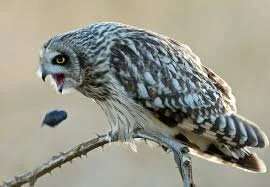
Owl Pellets

Unknown.jpeg

**Nature Nugget**

Owls are birds of prey, which means that they hunt other animals for food. Owls are generally active at night, hunting for small rodents, birds, and bugs that are a part of its nightly diet. They swallow their food whole, or in large chunks, depending upon the size of the prey. The soluble pieces of their food pass through their two-part stomach and are broken down to make way through the rest of the digestive tract, to be absorbed or excreted as waste. The insoluble or indigestible bits (fur, feathers, claws, bone, teeth, etc) are compressed in the gizzard for several hours, and then are regurgitated as a pellet. This process of regurgitation is called casting. Once the pellet is cast, the digestive process is finished and the owl is able to feed again.

Although roughly cylindrical and usually of a grey brown color, there is some variability in the size and composition of owl pellets, depending on the owl and the kind of prey they are produced from. Pellets are usually one and a half to three inches in length. Their contents can include bones, fur, feathers, bills, claws, teeth, exoskeletons of insects, and even indigestible plant matter, and tend to be odorless.

Owls aren't the only birds that cast pellets; many meat-eating birds, which also consume food that has indigestible matter, cast pellets as part of their digestive process. Birds who cast pellets include hawks, falcons, eagles, herons, cormorants, grebes, kingfishers, swallows, and many shore birds. Owl pellets tend to be larger than those ejected by these other birds because owls generally eat their prey whole, and their digestive acids aren’t as potent. Therefore owl pellets contain more complete bones and other animal remains.

Although owl pellets can be an exciting find, and are interesting to pull apart to examine the remnants of the bird’s diet, it is important to take precautions before handling one. Owl pellet dissection should only be undertaken with sterilized pellets due to the risk of contracting bacteria or viruses. 

Bay to Sea Trail

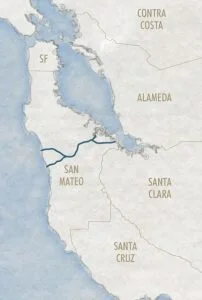
The Coastside Land Trust joins with 10 Organizations to formalize an agreement to create the ‘Bay to Sea Trail’ Across the Peninsula 

Public agencies and private nonprofits commit to connecting the San Francisco Bay to the Pacific Ocean for future recreational use

Bay_to_Sea_Trail_simplified-1-202x300.jpg

Palo Alto, Calif. – May 13, 2020 — Eleven public agencies, municipalities and private nonprofit organizations that manage and protect open space in the Bay Area have formalized an agreement to collaborate on creating a Bay to Sea Trail across the Peninsula for public use. The target date for completion of the project is 2037. The Bay to Sea Trail is envisioned as an approximately 40-mile trail that will connect people from across the region and beyond to open space and other regional trails on the Peninsula. This multiuse trail – for walkers, hikers, bikers and equestrians – will connect the San Francisco Bay to the Pacific Ocean.

Click to read the complete Press release

Flowers on the job

903DC66D-F0F6-48CD-89DC-45E6048C7B42.jpg

**Nature Nugget**

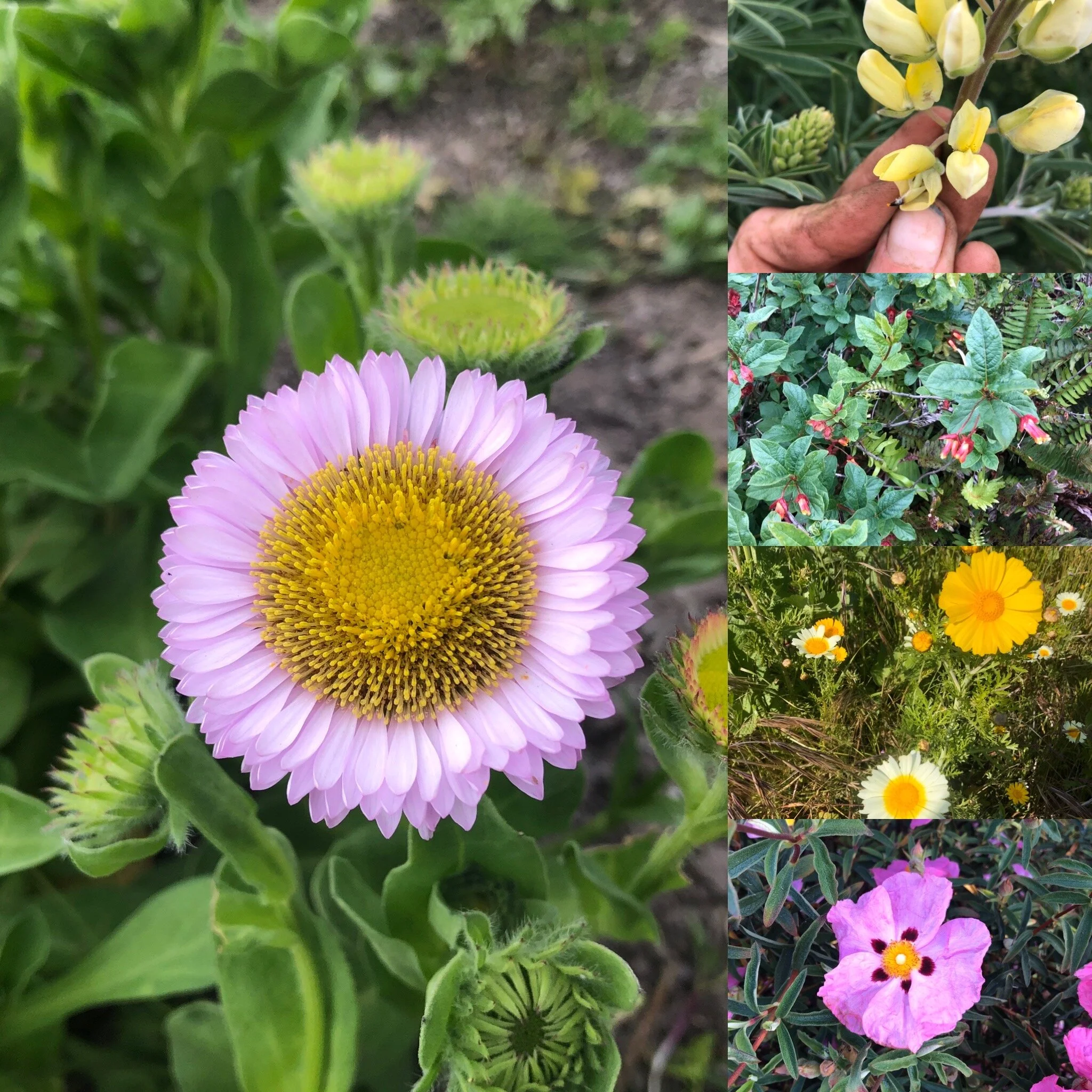
If you’ve looked out at your garden, or have taken a recent walk outside, you have surely noticed an abundance of blooms. It is a visual splendor, but also a part of a sophisticated process, by which plants have been evolving for millions of years to refine their methods for pollination (the transfer of pollen from stamen to stigma, either within a plant or between plants of the same species). These flowering plants are ever honing their mechanisms for pollen transfer, primarily by animals and wind.

About 25 percent of plants exchange pollen by wind. Wind pollination is the prominent method in grasses, most conifers and many deciduous trees (including oaks, poplars, walnuts, and brich). As allergies sometimes prove, wind-pollinated flowers produce a large amount of pollen in order to vastly scatter and increase the chances that it may land on another flower of the same species.

The greater majority of flowering plants are animal-pollinated. These flowers must use color, scent and shape to attract insects, birds and even bats. 

Color—Flowers use vibrant, often species-specific colors to attract pollinators. Many are marked with ultraviolet nectar guides, which can be seen by insects but are invisible to human eyes. 

Scent—Flowers use attractive scents, as well. Many are pleasing to humans too, but there are a number of flowers that attract flies and beetles with smells that resemble rotting meat or skunk spray. Scent is specifically important to night-flying insects (such as moths) that pollinate with decreased visibility, and a dependence upon bright white blooms and attractive scents.

Shape—The shape and size of flowers are important considerations, as well. 

Open, bowl-shaped flowers (like poppies, buttercups and daisies) generally have a ring of plentiful pollen in the middle of the flower. They attract a variety of pollinators, who collect the pollen onto their bodies as they move around the inside of the flower.

Lipped flowers, typically belonging to the sage or the pea family are specialized flowers that, in many cases, have a close relationship with bees. The lip at the front of the flower is the landing platform, from which the bee pushes its head into the flower to get at the nectar, while pollen rubs onto the back of its body (thorax).

Tubular-shaped flowers, such as honeysuckle or foxgloves, appeal to hummingbirds and bumblebees that dive in to get the nectar. Moths and butterflies also push their long thin tongues (proboscises) into the center of smaller tubular flowers.

Pollination is far more nuanced and sophisticated, and can be explored as we take time to discover and make note of our own local plants and their pollinators. Spring here on the coastside is a wonderful time to observe this process and the unique characteristics of local plants and their flowers, within your own ten-mile radius.

Pacific Tree Frogs

tree-frog-474949__340.jpg

**Nature Nugget**

Spring here on the coastside can be a noisy season- full of chirps, and buzzing and frog calls. Many of you Coastside residents have become very familiar with the sound of the Pacific tree frog (Pseudacris regilla). These frogs are also known as Pacific chorus frogs, and they live up to this name, as anyone who has been near a breeding pond can attest to. Their sounds are shared amongst themselves as a “language” that organizes breeding, with several distinct calls including the familiar “ribit,” each adapted to particular functions in attraction and rivalry.

These little frogs are unmistakable, with a conspicuous dark "mask" or eye stripe extending from the nostrils through the eye as far as the shoulder. They are small frogs, at approximately 5 centimeters in length, and have a rounded toe pad at the end of each digit. Their coloration includes shades of green, tan, grey, brown, reddish, or black - and can change colors over periods of weeks or even hours. Females are slightly larger than males, a feature common with many frogs. The presence of a vocal sack on the male throats can also help to identify the gender. 

The Pacific Tree Frog ranges from British Columbia to Baja, Mexico, and eastward to Montana and Nevada. They are the west coast’s most prevalent and adaptable frog species. More resistant to pollution and habitat modification than others, they will breed in almost any kind of fresh water, including seasonal puddles. These frogs eat a wide variety of arthropods, including spiders, flies, beetles, ants and other insects, and they can expand their bodies to eat prey that is almost as large as they are.

Name that yellow

59EC67C9-18E4-4113-B118-B4F26861D10E.jpg

**Nature Nugget**

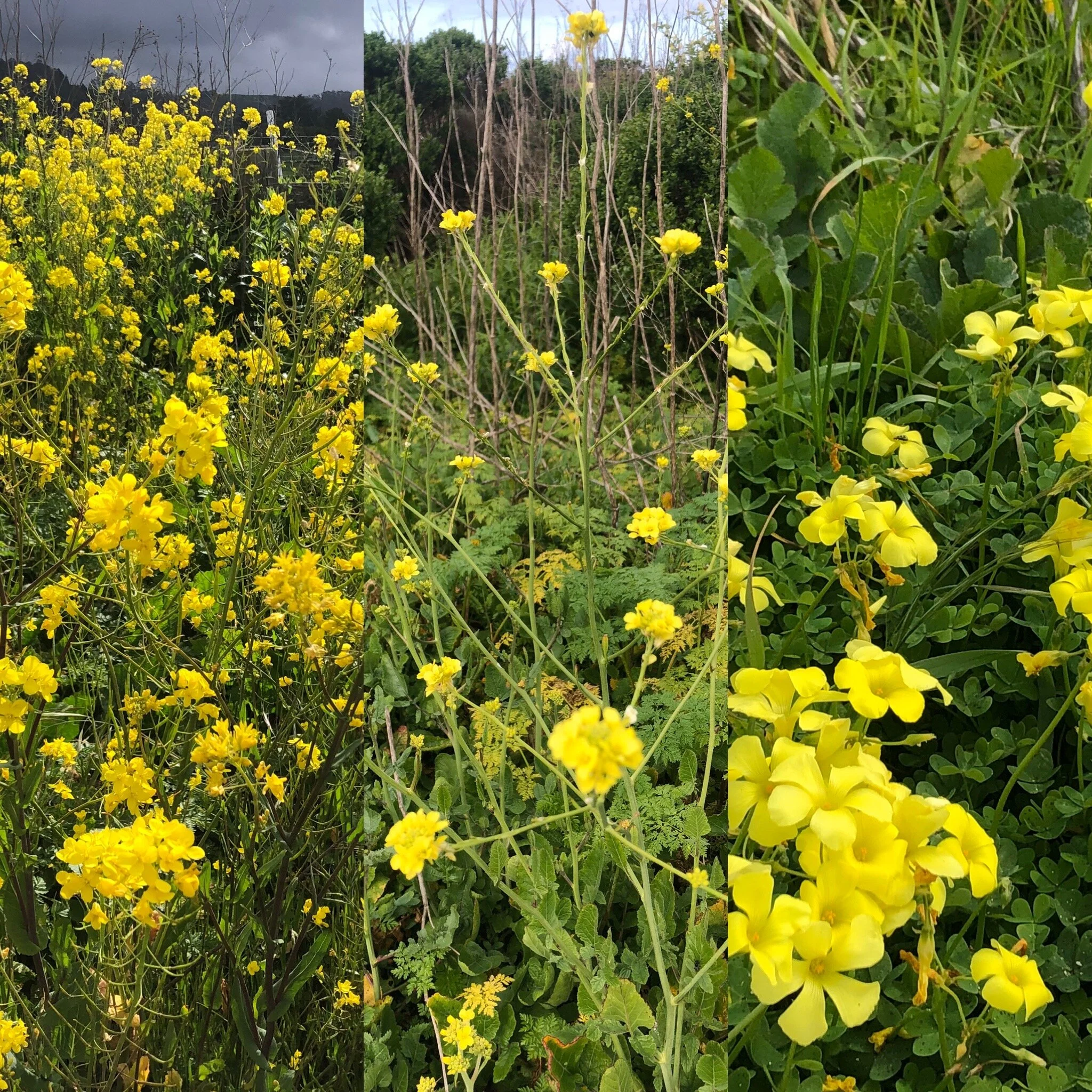
This time of year there are many flowers in bloom, and more that join the landscape every day. Yellow is a dominant color along our coastline, found everywhere from gardens and fields, to vacant lots and cracks along the pavement. Although this list of yellow flowers is extensive , there are three prevalent non-native yellows that are often mistaken for one another here on the coastside. Take a closer look at these links to examine the differences between :

Black mustard - Brassica nigra

https://www.calflora.org/cgi-bin/species_query.cgi?where-calrecnum=1144

Shortpod mustard, summer mustard - Hirschfeldia incana:  http://www.calflora.net/bloomingplants/shortpodmustard.html

Sour grass, bermuda buttercup - Oxalis pes-caprae:

https://www.calflora.org/cgi-bin/species_query.cgi?where-calrecnum=6016

Also check out Tom Chester's analysis page to examine a more detailed explanation of the distinguishing characteristics between black and shortpod mustard:

http://tchester.org/plants/analysis/mustard/comparison.html

Peregrine Falcons

92345973_4003762289694400_2309580790402383872_o.jpg

**Nature Nuggets**

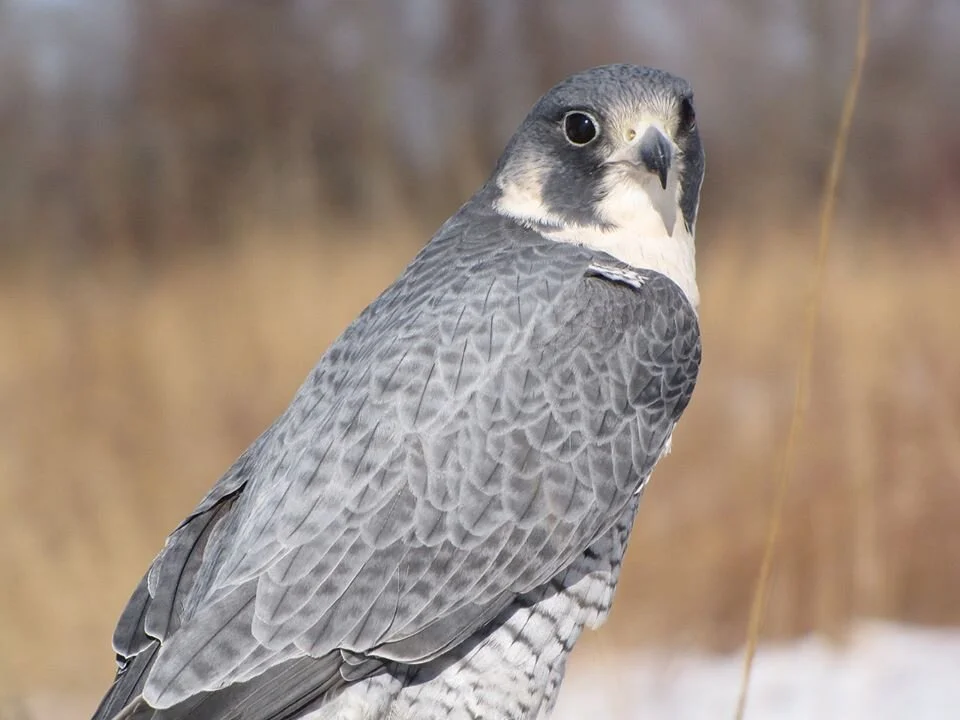
Peregrine Falcons are living among us here on the coast , and they are a wonder to behold. With flight speeds that can reach over 200 mph, they are one of the fastest animals on earth. In 1971, the peregrine falcons were some of the first birds to be placed on California’s Endangered Species List, in addition to being listed under the federal Endangered Species Act in 1970. At that time in California the population was listed at just five pairs. The greatest cause of this decline was due to their ingestion of prey contaminated with DDT (an insecticide that has since been banned).

Thanks to the combined efforts of several non-profit groups (including the Santa Cruz Predatory Bird Research Group) and the work of state and federal agencies, these raptors were federally delisted in 1999 and delisted in California in 2009. There are now well over 300 active breeding sites in California.

As predators of several of our shorebirds, some peregrine falcons have made their homes here on the Coastside. Many locals have viewed the Devil’s Slide cliffs, where these falcons have nested since the mid-1980s, even as that stretch of highway was re-established as a trail and the tunnel was built. Check out these nest cams in San Francisco and San Jose to view a couple of Bay Area peregrine falcon nests for yourself! Watch how they court, pair bond, and share in the incubation and care for their young: https://pbrg.pbsci.ucsc.edu/NestCams.html#header6-21, Enjoy this virtual “birds-eye-view” provided by the Institute of Marine Sciences from the University of California, Santa Cruz.

Western Sandpipers on our shores

Western Sandpiper Photo Credit: Alvaro Jaramillo

Western Sandpiper Photo Credit: Alvaro Jaramillo

**Nature Nugget**

Check out this photo of the Western Sandpiper, taken from local bird specialist, Alvaro Jaramillo. These Western Sandpipers are migrating through the San Mateo County coast right now on their way up to northernmost Alaska. The Western Sandpiper shows bright rusty colors on the back and face during the breeding season and grayish in winter. It is 6-7 inches in length and has a wingspan of 10-15 inches, with white undersides, a long bill with a slightly curved tip, long legs, and slightly webbed feet. Females tend to be larger and have longer bills than males.

The Western Sandpipers can be found probing into the mud or sand, extracting aquatic invertebrates (such as crustaceans, mollusks, and marine worms), feeding in or at the edge of shallow water. Their diet also includes insects, spiders, and larvae, which they pick from plants or water.

Pacific Flyway and the Coastside's local Warblers

Wilson’s Warbler Photo Credit: Sue Orwig

Wilson’s Warbler Photo Credit: Sue Orwig

** Nature Nugget**

The Pacific Flyway is one of North America’s four main migration routes for birds, it extends from Alaska and Canada, through California, to Mexico and South America and stretches from the Rocky Mountains west to the Pacific Ocean. Birds follow ancestral patterns along this route as they travel the flyway on their annual north-south migration, which is over 4,000 miles long and, in places, over 1,000 miles wide.

Each year at least a billion birds migrate along the Pacific Flyway, including more than 350 bird species, and this time of year the Pacific Flyway is rockin’!!

As the largest estuary (tidal mouth of a large river) on the Pacific coasts of both North and South America, the San Francisco Bay is a critically important stopover for birds moving along the Pacific Flyway. The Bay offers an abundance, and diversity of habitat for a great number of migrant birds. Here on the peninsula, we are lucky to view a great number of these birds, whether they winter here, stay for the late spring/summer, or just stop in on their way through. 

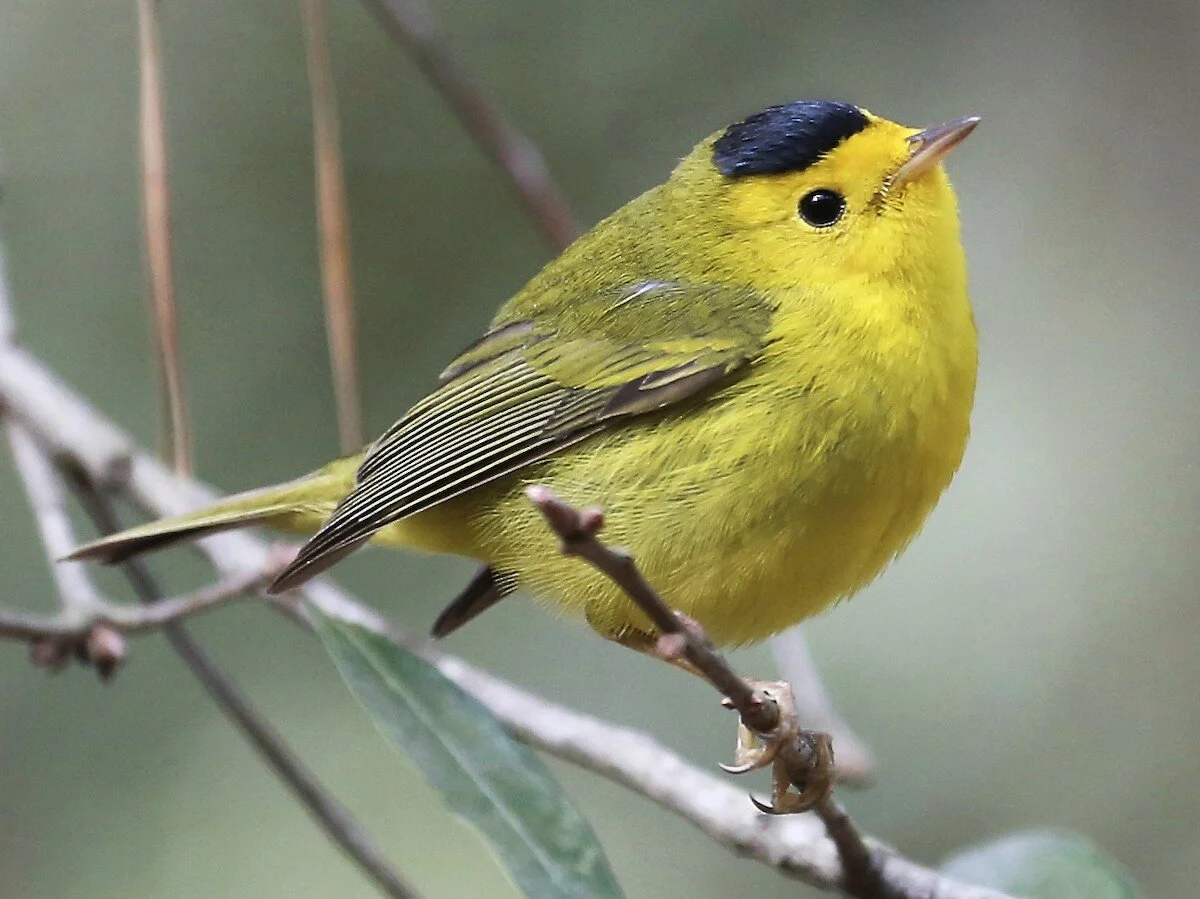
Some birds to pay particular attention to right here on the coast are the Warblers. In April to May, the Townsend’s and Yellow-rumped Warblers, who you may have seen cross your path or in your backyard from August/ September are leaving to head to their northern summer breeding grounds for a few months. In exchange, from April to September, we get our opportunity to see another beautiful yellow colored Warbler the Wilson’s Warbler. 

Check out this link to Cornell Lab’s “All About Birds” to learn a little bit about each of these (and other) Warblers and hear their songs: https://www.allaboutbirds.org/guide/browse/shape/Warblers

Junior Land Stewards Today

Photo Credit: Barbara Dye

Photo Credit: Barbara Dye

Hello Coastside Land Trust friends,

We are all currently experiencing a time of great change. In our homes, as we shelter in place, we often feel vulnerable and uneasy. We are isolated and disconnected. But there is something healing about looking out the window, about taking a step outside to listen to the birds, to observe the spring blooms, to feel the movement of the air.  It is something that crosses generations, and cultures, and political boundaries.

To observe nature, and to be curious about it is a gift we can give to ourselves. This is also something that we can help our children to understand and to appreciate. The main purpose of the Junior Land Stewards program has been to do just this - to connect our Coastside children with the natural world, and to develop a genuine sense of wonder and care for their open spaces, and the natural world around them. We dually have called upon them to become stewards of the land, so that they are not solely observers, but that they identify themselves in a way that is connected to the earth, and responsible for it.

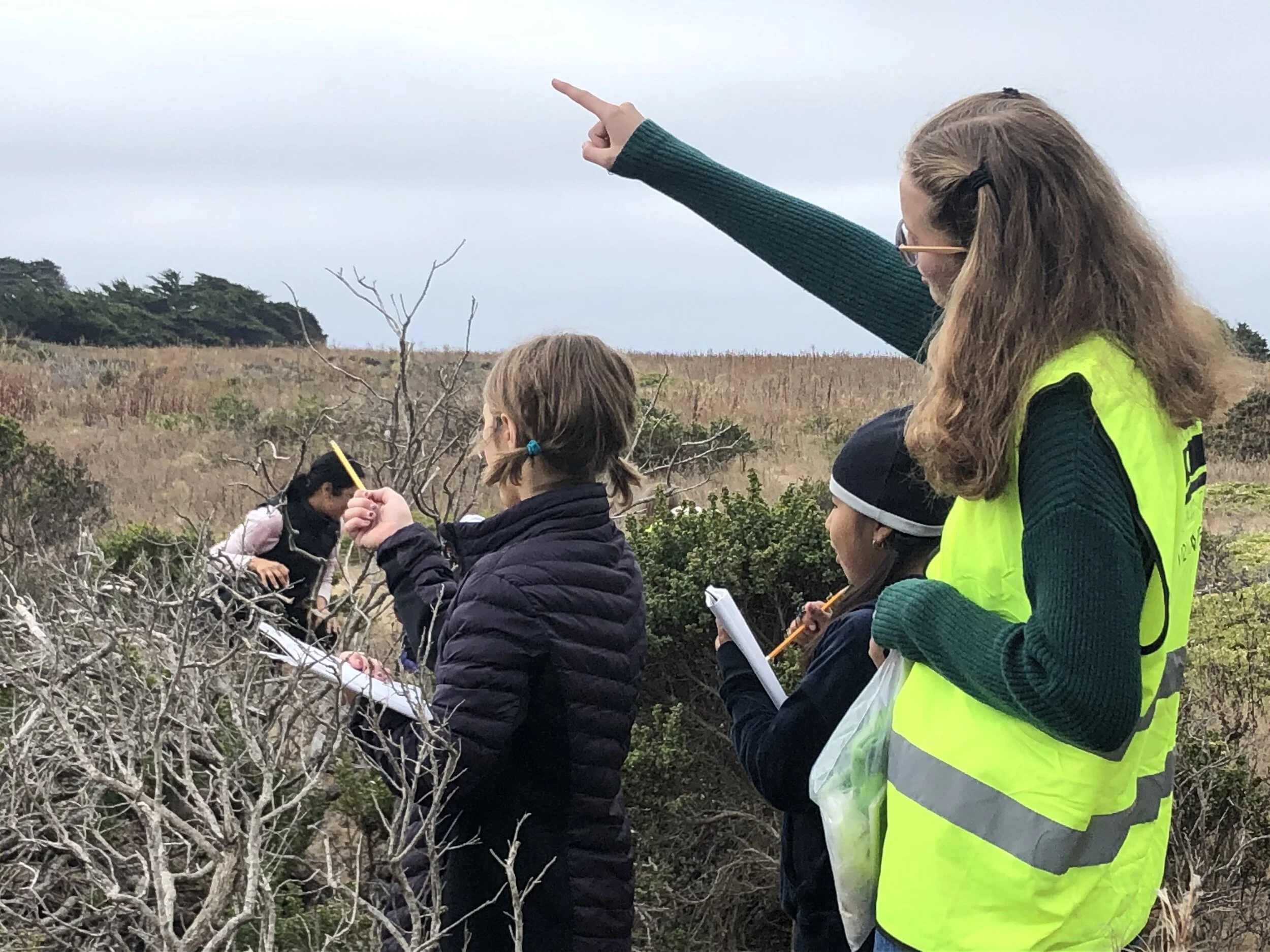
In this difficult time, we must count our blessings. One great blessing is that our Junior Land Stewards had just the right amount of time this year to take part in their 4 field studies projects. They explored our local open space and critically discussed and observed the function and interdependence of the many species of plants and animals. Students dissected flowers and plants and seeds. They sowed their own seeds and watched them grow, and develop- and ultimately planted them into Wavecrest Open Space in the form of 3 pollinator gardens. They did this with the goal of attracting and providing food for critically important pollinators (e.g. birds, butterflies, bees, and other insects), while adding to the diversity of the native plants and the overall health of the coastal prairie habitat. Our own Half Moon Bay High School environmental education students served as leaders in this program, and were also given ample opportunities to connect with nature and be the stewards in this process. 

As we were first asked to shelter in place, this program seemed like something that we would have to put on hold. After all, how could we ask kids to get their hands dirty outside when they are sheltering in their homes? Community members and students, however, have quickly proven us wrong, reminding us that this is actually the time when the original tenants of the program are critically important. Students must observe that the plants and birds and other animals continue to live and thrive, and grow- regardless of our current struggles. The pollinator plants that our students placed into the ground less than 2 months ago have grown exponentially, and many have begun to bloom. They are already attracting pollinators and Wavecrest Open Space is vibrant and alive with the changes of Spring. Students are observing how their stewardship continues to impact the world around them, via virtual weekly field trips to their garden plots (weekly photos and videos taken by CLT staff). 

The Junior Land Stewards are also being challenged weekly to get outside into their own backyards, or to look out their windows to take the soundscape, to observe and analyze nearby trees, to examine clouds and traces of the animals around them. Here is one fourth grade student’s recent personal refection, written independently and shared with her teacher, Mrs. Arkell:

Why are wild, open spaces important to you and the world?

By: Kaylee Serrano 

Wild and open spaces are important because they provide the habitat for mammals, birds, insects, and seeds to survive. Open space supports human health. Nature provides countless processes that give us high-quality air and clean and bountiful water. Open spaces have amazing plants that make it look one hundred times better. If the plants are native plants they are really good for the environment. If they are invasive plants they are not so good for the environment because invasive plants take over too much space. And we want to have more space for native plants.

Please stay tuned for our virtual gallery in which our students will share a great deal of their learning, through photographs, writing, and illustration. It is our hope that you too will find joy in witnessing the work, the thinking and the curiosity of our local Coastside students.

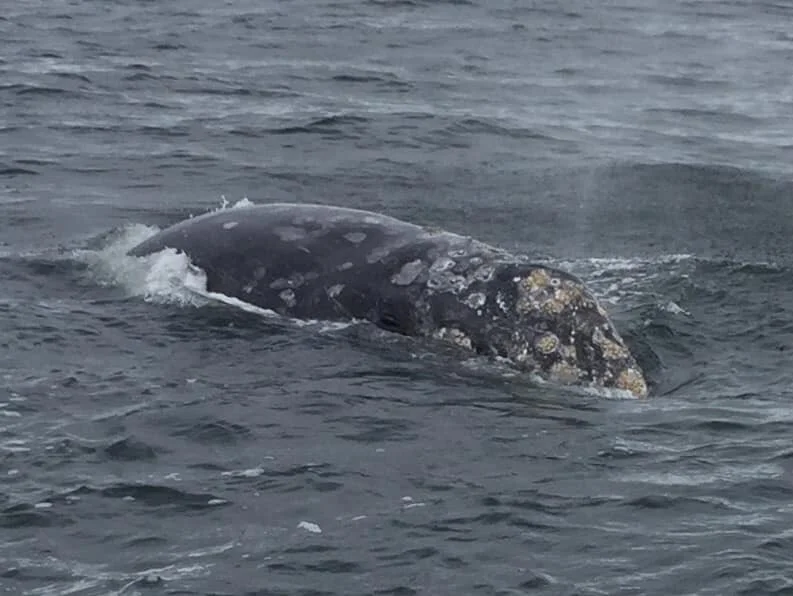
Eastern North Pacific Grey Whale

Photo credit: Nicole Larson

Photo credit: Nicole Larson

**Nature Nugget**


As many of you have come to notice, there is something quite incredible going on right off of our shoreline! The eastern North Pacific gray whales are currently passing through on the great northbound migration from Baja, Mexico to their Arctic feeding grounds. These whales travel between 9,000 -13,000 miles annually, undergoing one of the greatest migratory journeys of any mammal on earth. They have been doing this for approximately 30 million years, and have survived great hardship, including their complete return from the brink of extinction in the early 1900’s due to whaling. Today gray whales are protected by international law, they were removed from the Endangered Species List in 1994, and there are now approximately 26,000, similar to population numbers before modern-day whaling. 
During their northbound migration the eastern North Pacific gray whales segment into two phases. The first phase includes newly pregnant females, followed by adult males and females, and then immature whales of both sexes. The second phase consists mostly of cows and calves, which migrate inland from the greater pod, traveling very close to shore, in order to be protected from predators. Gray whales can be seen passing by California in March, April, and May on their northern journey, and again in December and January during their southern migration. 

Junior Land Stewards in the Field

IMG_9051.jpeg

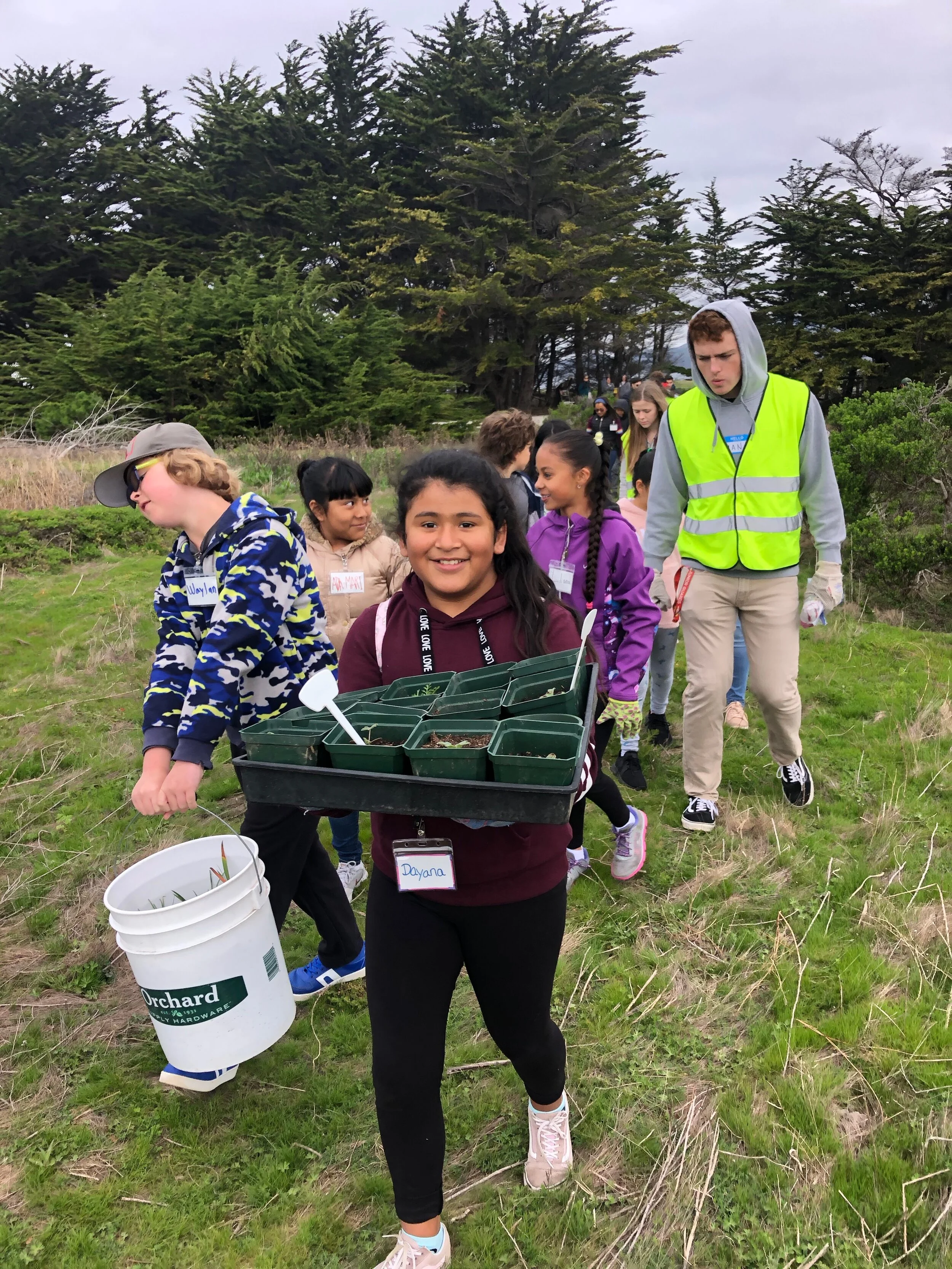
Over the last two weeks, the fourth grade students at Hatch Elementary and the Half Moon Bay High School environmental education students headed back to Wavecrest Open Space to expand their native pollinator plant gardens. They planted seedlings that they grew in their classrooms, as well as native plants provided by the California State Parks Nursery. These last trips have concluded their field studies and stewardship projects in the Wavecrest Open Space for the school year. Students will continue to work within the classroom as they prepare for a public presentation of all of their learning. This event is open to community members of all ages to learn about our local ecosystem.